Sleep, and a plan for tonight
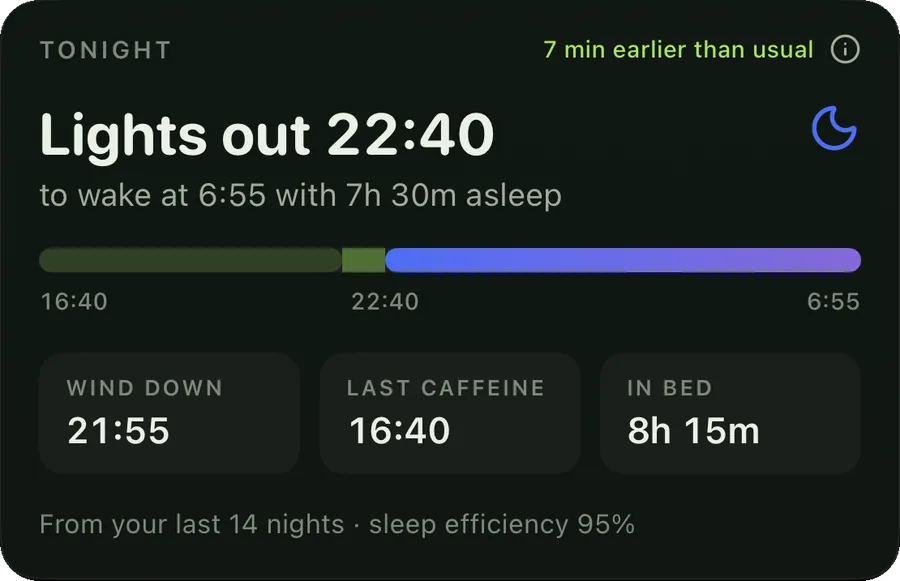
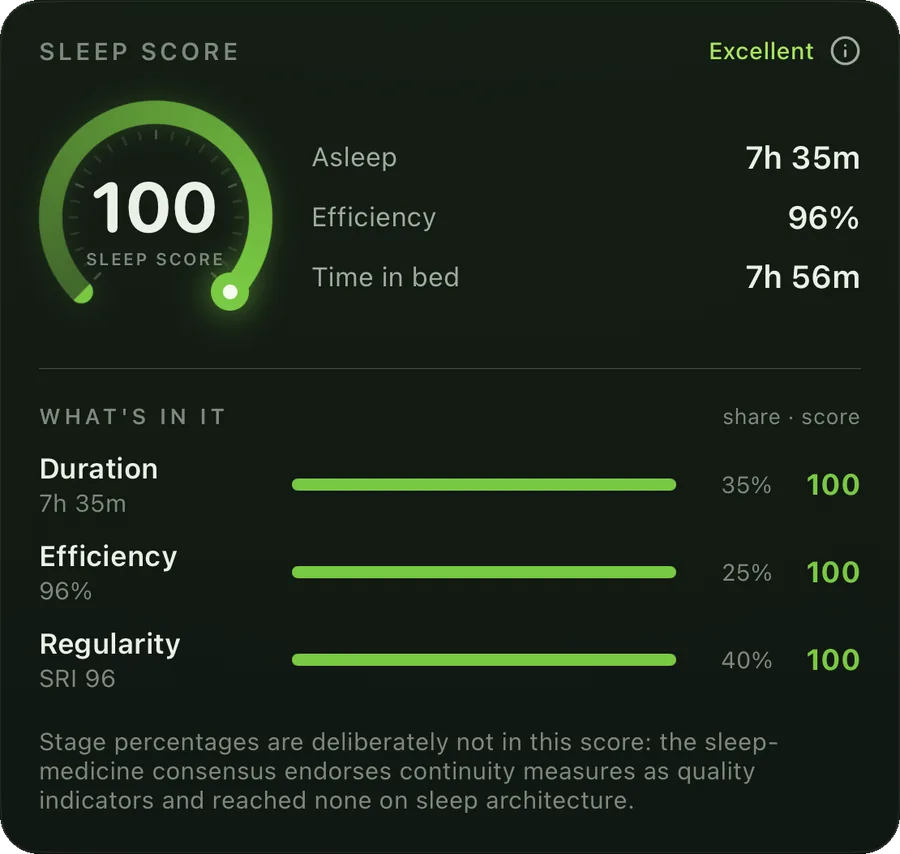
A sleep score built on regularity, duration and efficiency, the parts the research supports. Then tonight’s plan, worked back from your own nights: wind-down, last coffee, lights out.
Launching soon on the App Store
Spline reads what your iPhone and watch already record and turns it into one clear call each morning: push, ease off or rest. Every score shows what moved it and cites the study behind it. All of it stays on your iPhone.
Reads Apple Health, so it works with what you already wear.
Each device shares different data with Apple Health. Spline shows what it gets and says what’s missing, rather than filling the gap.
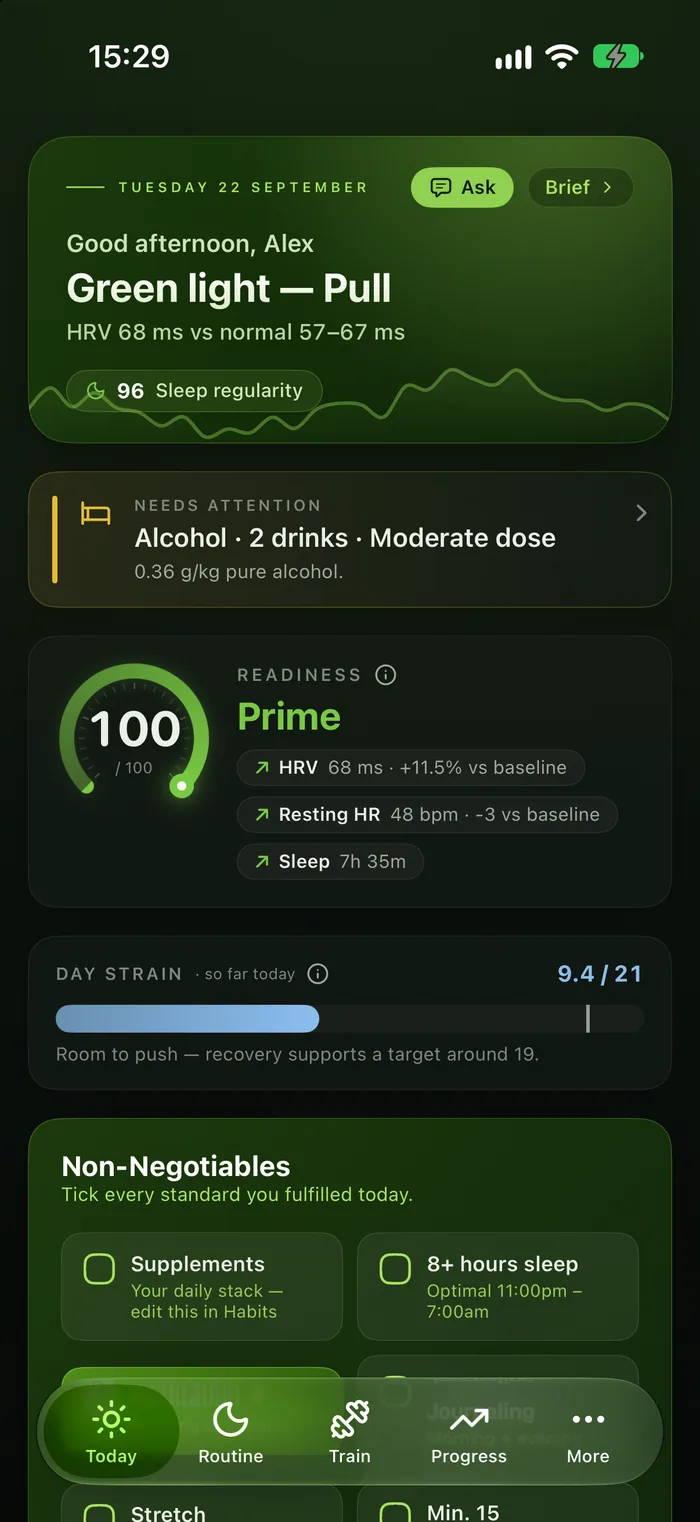
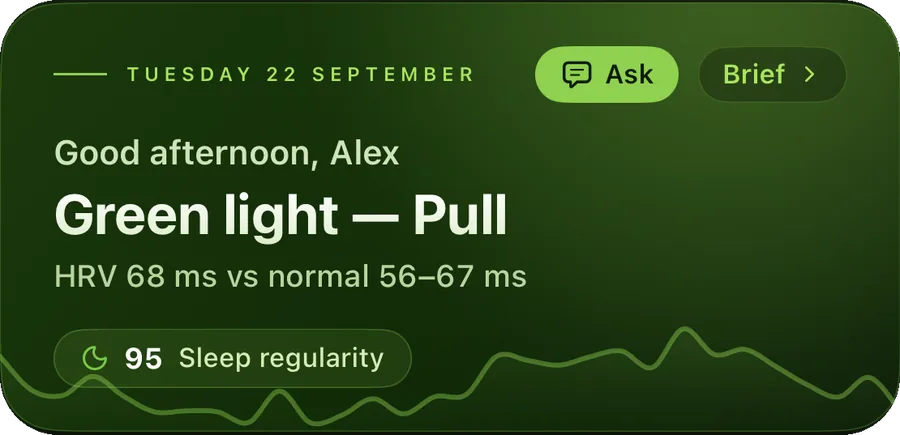
Spline compares last night with your own normal range, not a population average, and turns it into a decision you can act on before breakfast.
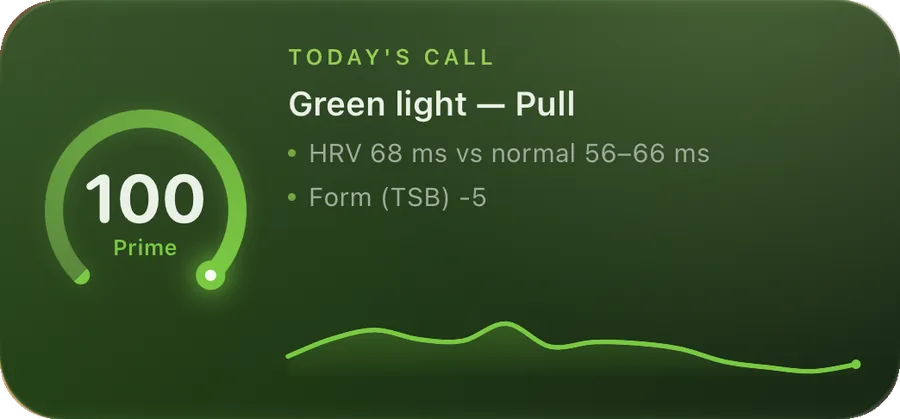
Green light, ease off, swap to easy or rest, with the measurement that decided it right underneath. On a morning without enough data, it makes no call at all.
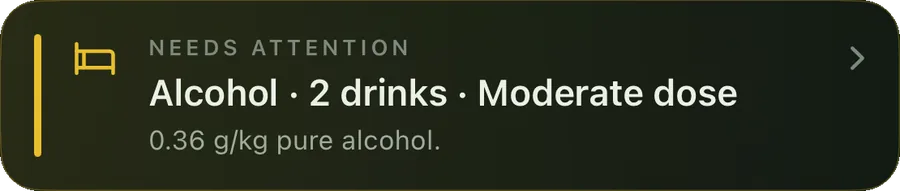
When one signal sits outside your usual range, like a short night, a raised resting heart rate or last night’s drinks, it’s named first. When nothing does, Spline stays quiet instead of cheering.
Every score opens into its drivers, each against your own baseline, and the formula that combined them. Tap the ⓘ on any metric for the method and its source.
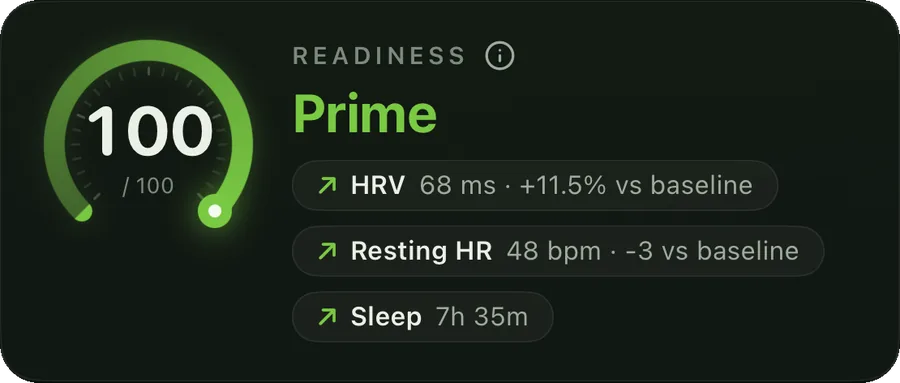
Screens from the current build, shown with demo data.
Sleep, recovery, training, food and the long game. Each one built on a named method you can look up.
A sleep score built on regularity, duration and efficiency, the parts the research supports. Then tonight’s plan, worked back from your own nights: wind-down, last coffee, lights out.
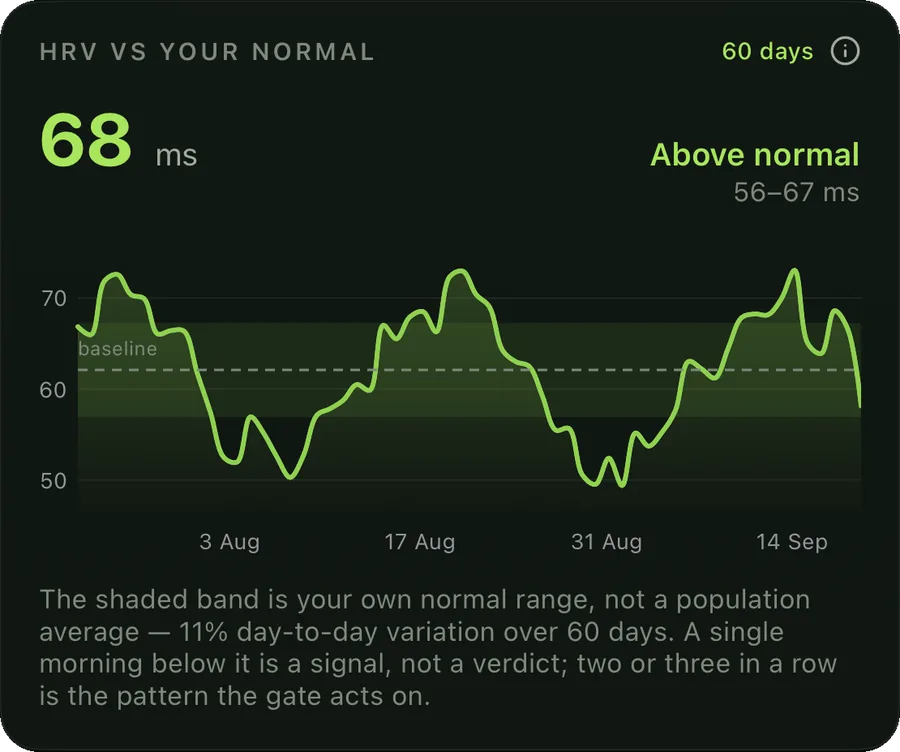
HRV and resting heart rate measured against a 60-day range that’s yours alone. One low morning is a signal. A run of them is a pattern.
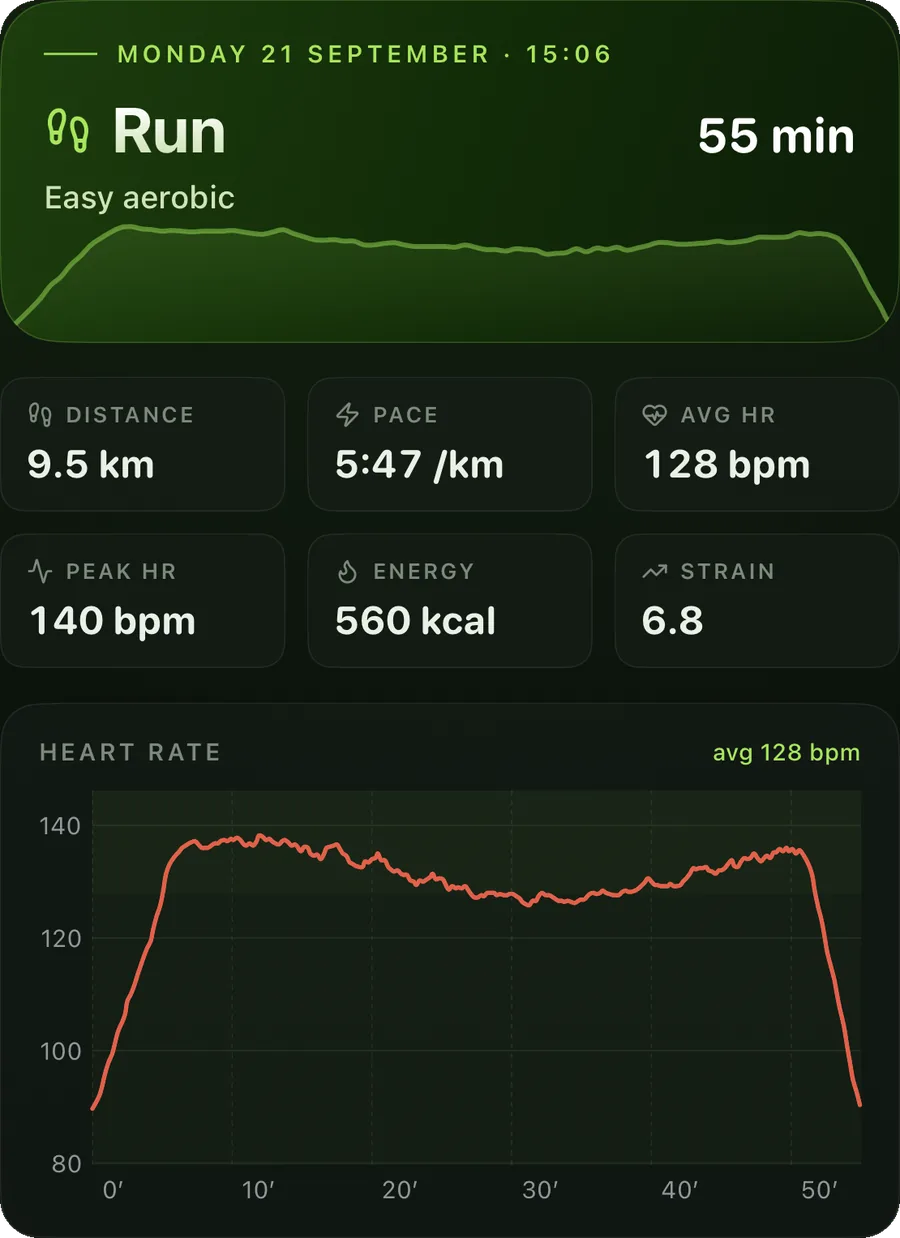
Heart-rate zones, strain and recovery for each recorded session, with a share card that shows only what you choose.
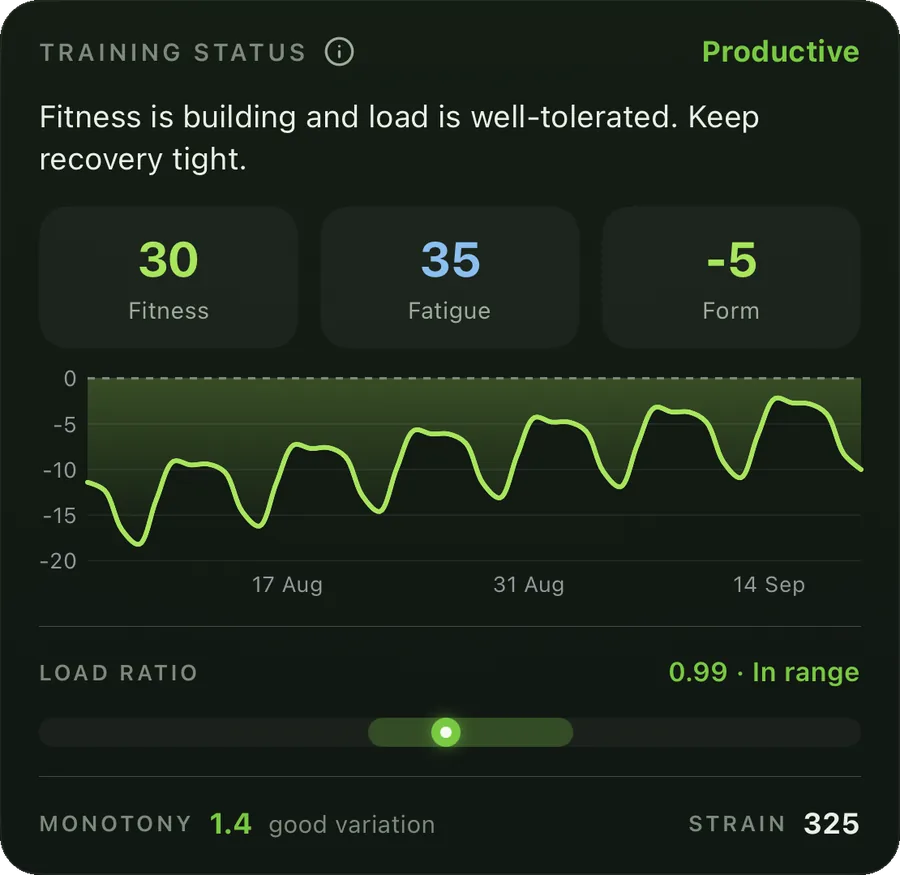
A named training-load model, plus an HRV gate that can veto a hard day when your body disagrees with the plan.
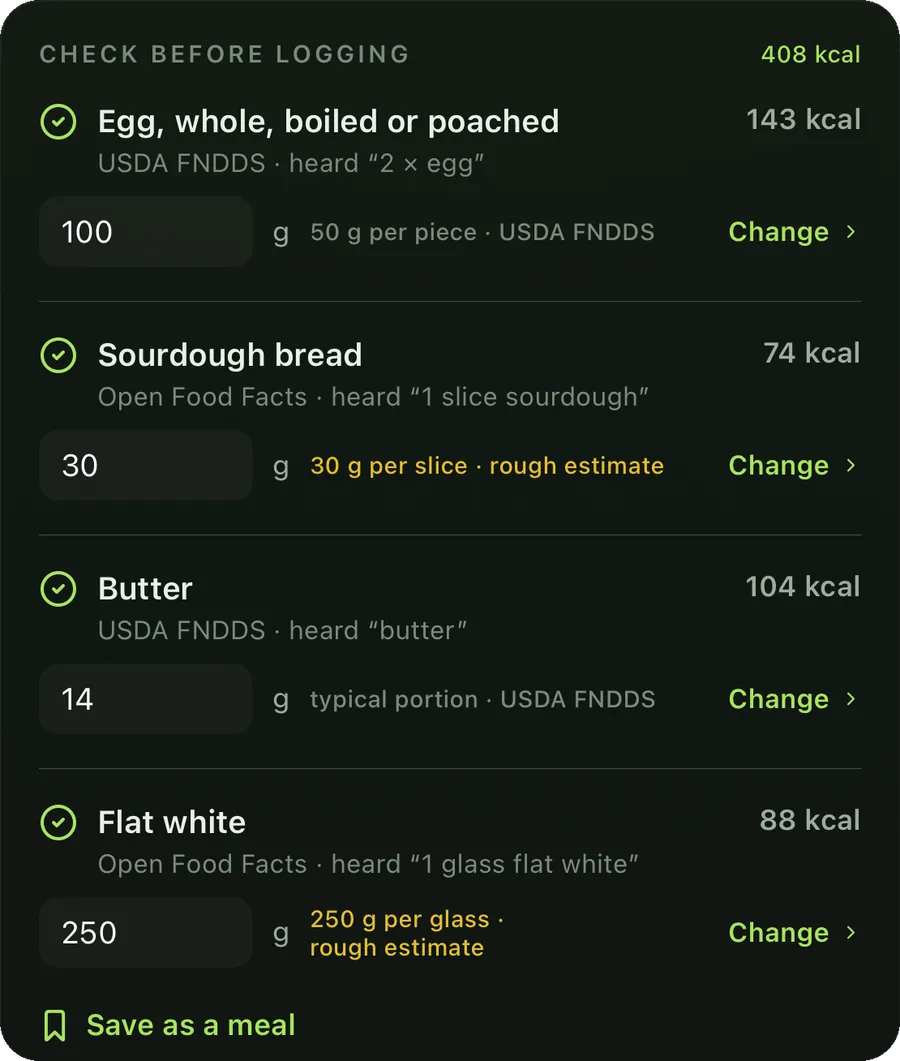
Type what you ate, scan a barcode or a label. Calories come from food databases or the label itself, never invented by the AI, and Spline learns from your corrections.
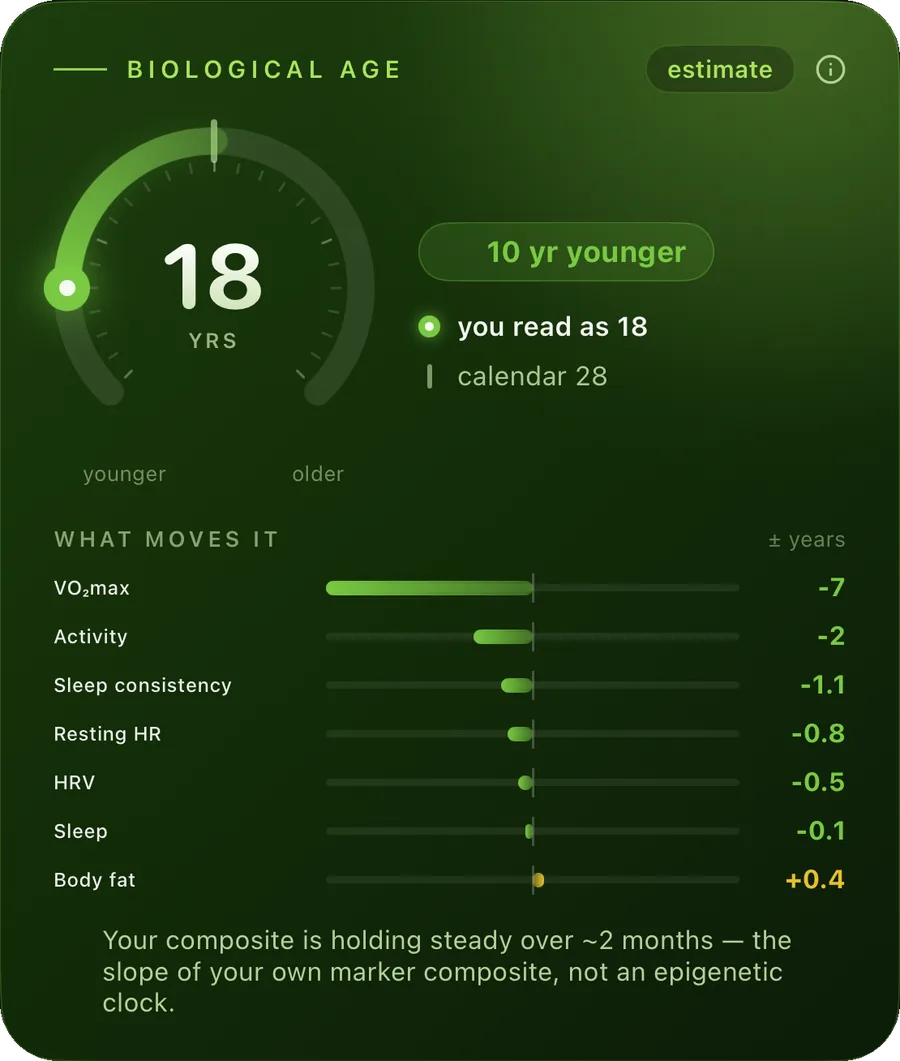
The age your vitals read as, with the years each factor adds or subtracts. Labelled as an estimate, because it is one.
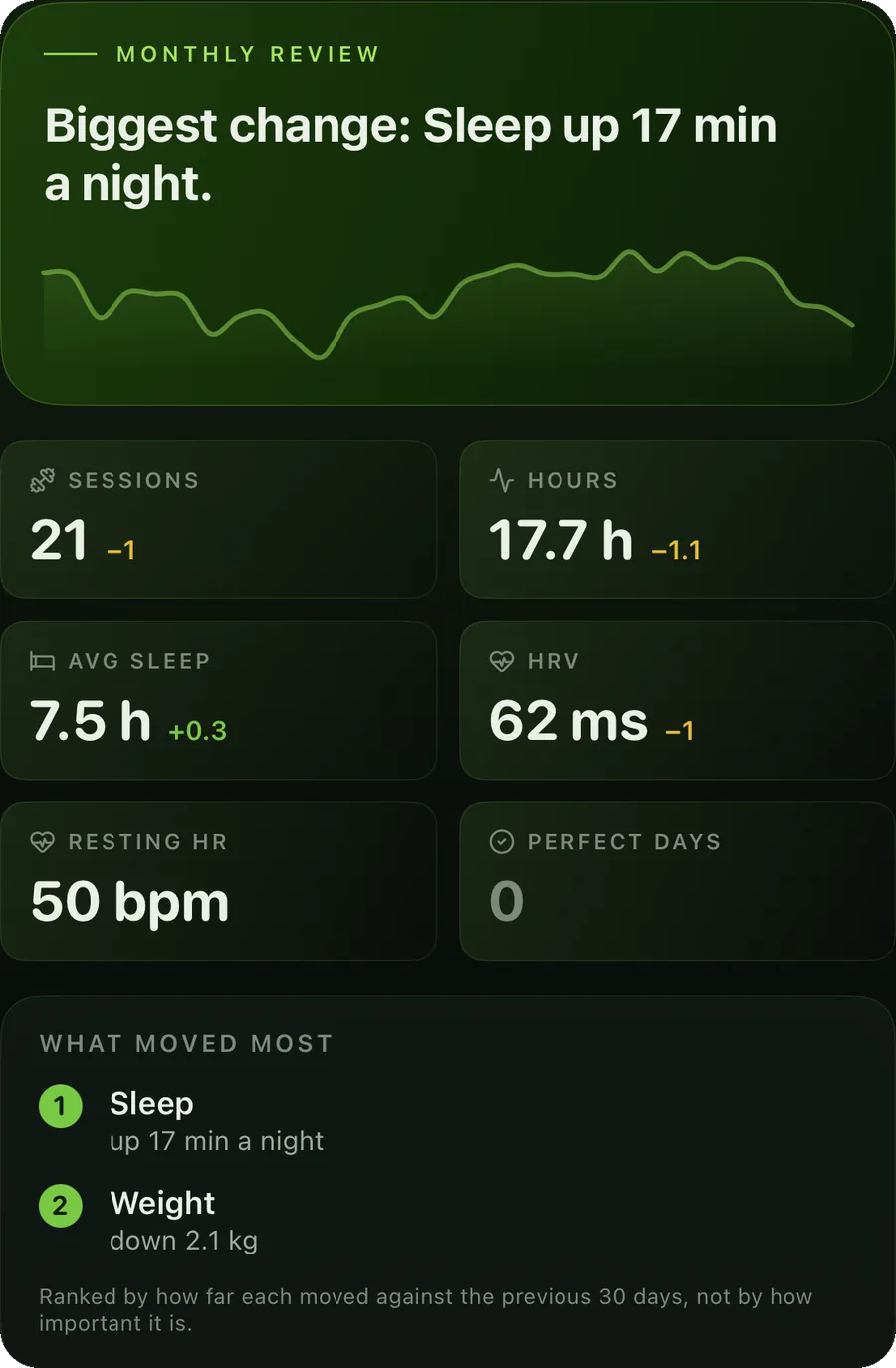
A scorecard against the month before, what moved most, and a chart for every section. Ranked by how far each one moved.
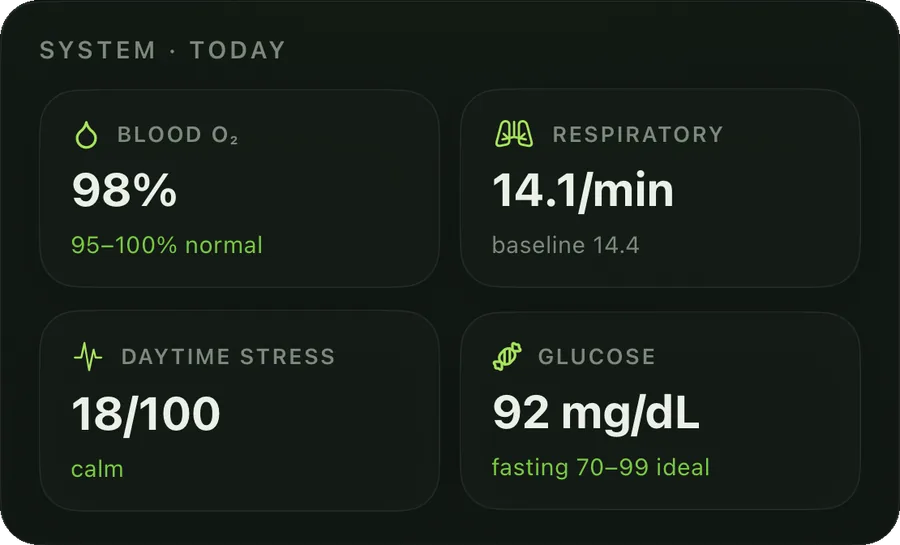
Blood oxygen, breathing rate, daytime stress and glucose. Home blood pressure is judged as a 7-day average against ESC 2024 thresholds, never on a single reading.
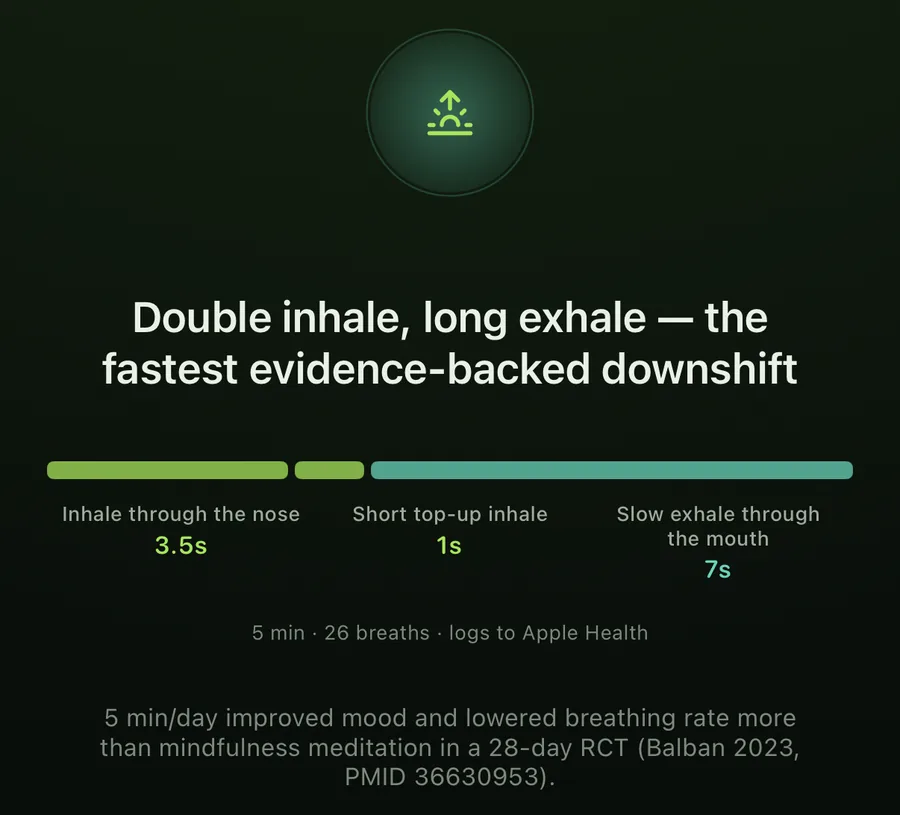
Cyclic sighing, the fastest evidence-backed way to downshift, with a haptic on every phase. Sessions log to Apple Health.
Import a lab PDF or photo and it’s parsed on the device. Longevity-oriented ranges, and a test of whether a change is real or just noise.
The quieter parts that make the numbers mean something.
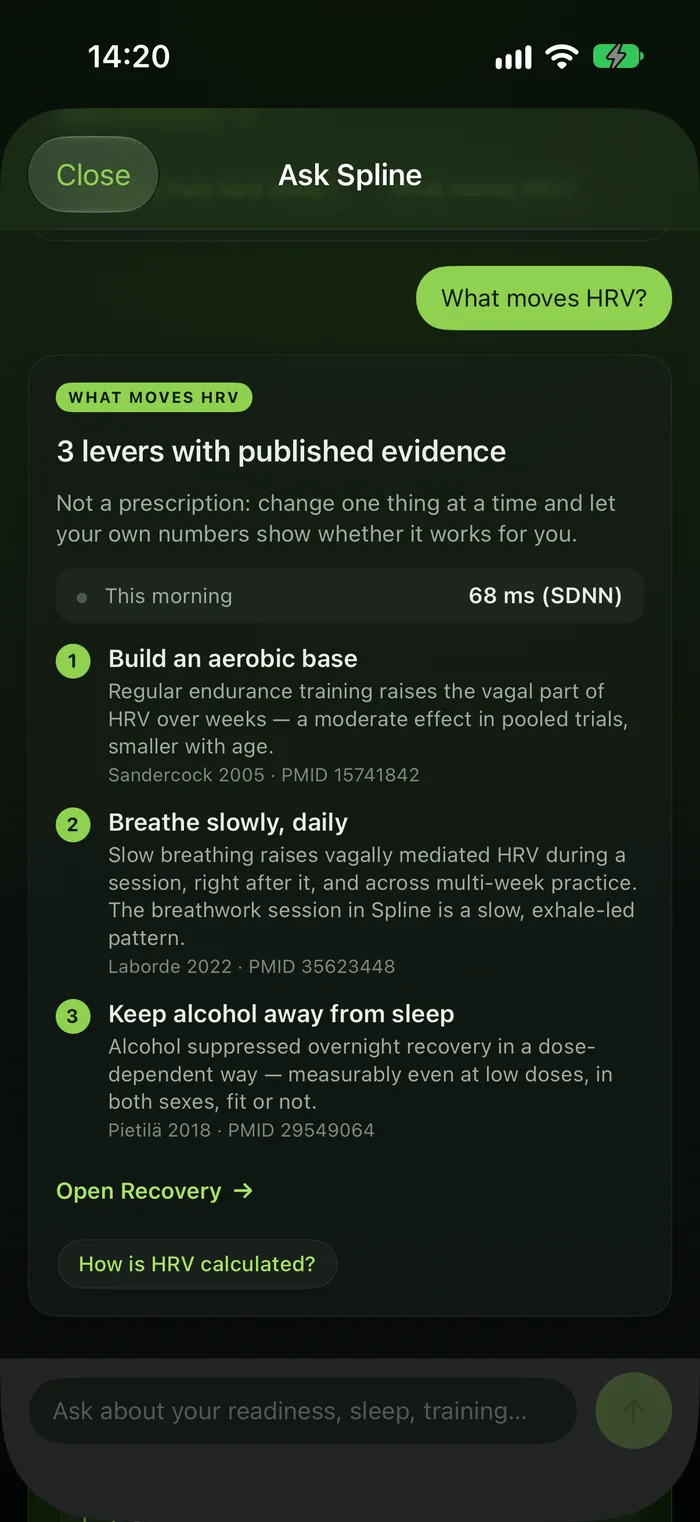
Ask about your readiness, sleep or training in plain words. Spline answers from your own data and the research behind each metric, on your iPhone. If it hasn’t measured something, it says so.
Or ask Siri: What’s my call in Spline?
It answers from your latest reading without opening the app.
Ask Spline is part of Spline Pro.
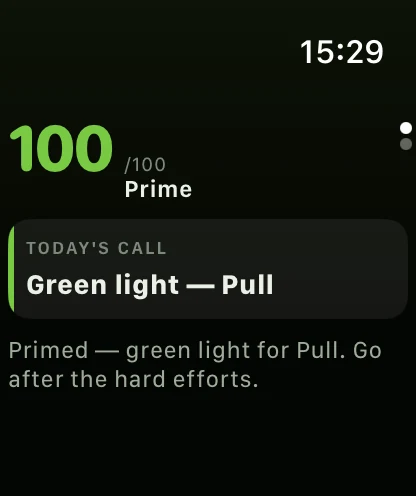
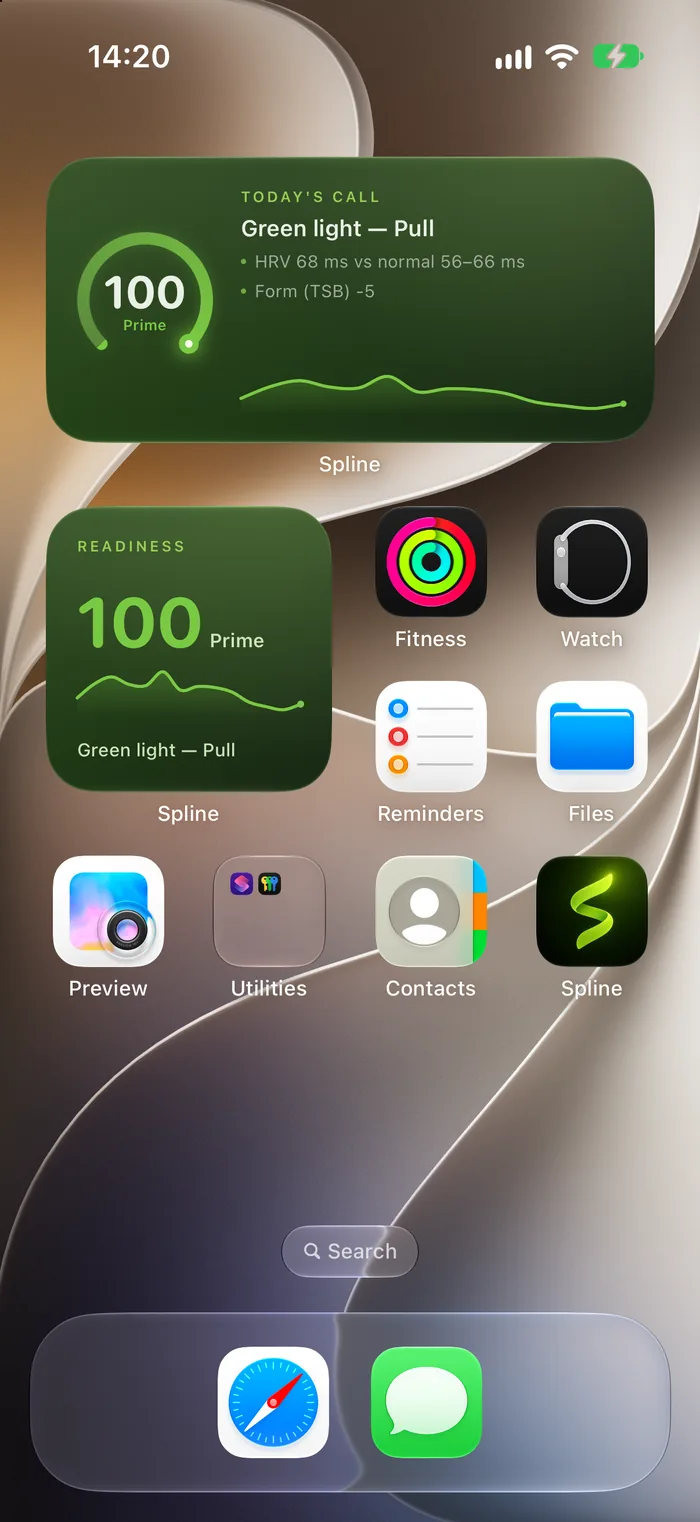
Widgets, your Apple Watch, Live Activities and Siri show the call your iPhone already made. It’s computed once, so they can never disagree.
Readiness and today’s call at a glance. In the evening, the widgets switch to tonight’s lights-out time.
The Apple Watch app and complications show the same call, clearly dated if your iPhone hasn’t updated it yet.
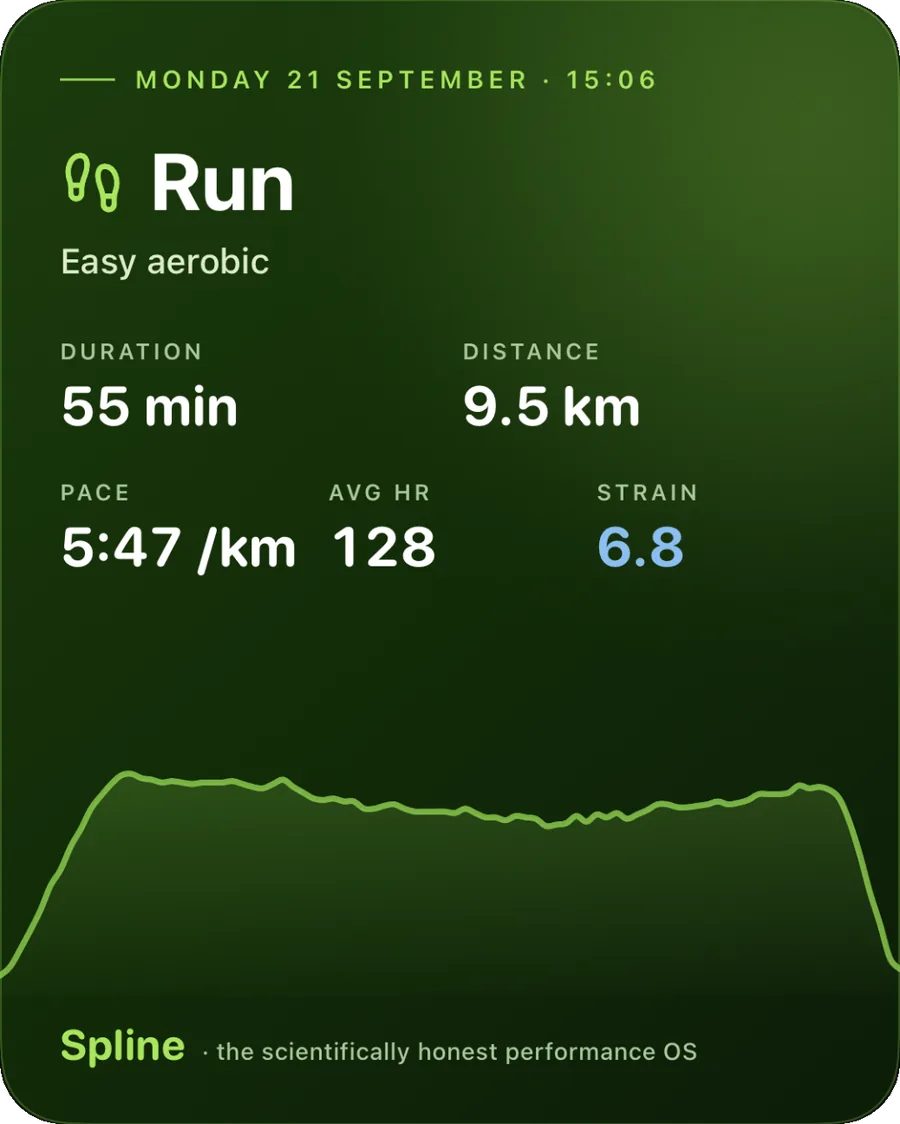
Share a day, a session or a month as an image. Only what’s on the card leaves your phone.
Other apps ship proprietary scores and ask for trust. Spline names the method behind each metric, links the study, and grades the evidence honestly, including where it’s thin. These are real citations from inside the app:
70+ studies cited across the app, each by PubMed ID, with the formula beside it.
Read every methodTrust lives in the details. These aren’t slogans; they decide what the app is allowed to show you.
Every warning carries the measurement that triggered it. The app has no way to raise one without it.
Missing data is named, never filled in. With no HRV this morning, Spline makes no call rather than guessing one.
Baselines are your own 60-day ranges, so a “good” number means good for you, not for a stranger.
Habit patterns are tested against the next morning, corrected for multiple comparisons, and reported as associations.
On-device models read your words and pick the topic. Every value comes from a measurement, a food database or the label you scanned.
Export everything as JSON or CSV, free, forever. Pro pays for extra analysis, never for access to what you recorded.
| Spline | Typical wearable app | |
|---|---|---|
| Where the score comes from | Named formula and PubMed ID | Proprietary, undisclosed |
| Where your data lives | On your iPhone | Their servers |
| Hardware required | What you already own | Their band or ring |
| When the evidence is weak | Says so, on the metric | Presented as fact |
| Export your data | Free forever, JSON and CSV | Partial, or none |
Your daily call, sleep, recovery, training and every export of your own data stay free, forever. Spline Pro adds the long-horizon analysis.
Free, with no account and no trial timer.
or €34.99 a year, about €2.92 a month (save 27%). All prices include VAT.
Cancel any time in your Apple ID settings. Still no servers, no account, and no analytics on your health.
Payment is handled by Apple. Subscriptions renew automatically unless cancelled at least 24 hours before the end of the current period. See the Terms of Use and Privacy Policy.

Spline isn’t on the App Store yet, but it’s close. Free to start, with no account, and your data stays on your iPhone.